For Lucas 空 & Lucy 悟 · 2026–2027
Music & Dance Appreciation
Inupiaq drum and dance — the qiḷaun, Nalukataq, and the songs that call the whale — beside Hunan Huaguxi 湖南花鼓戏, studied through Inupiaq epistemology, Chinese philosophy, and Western arts appreciation.
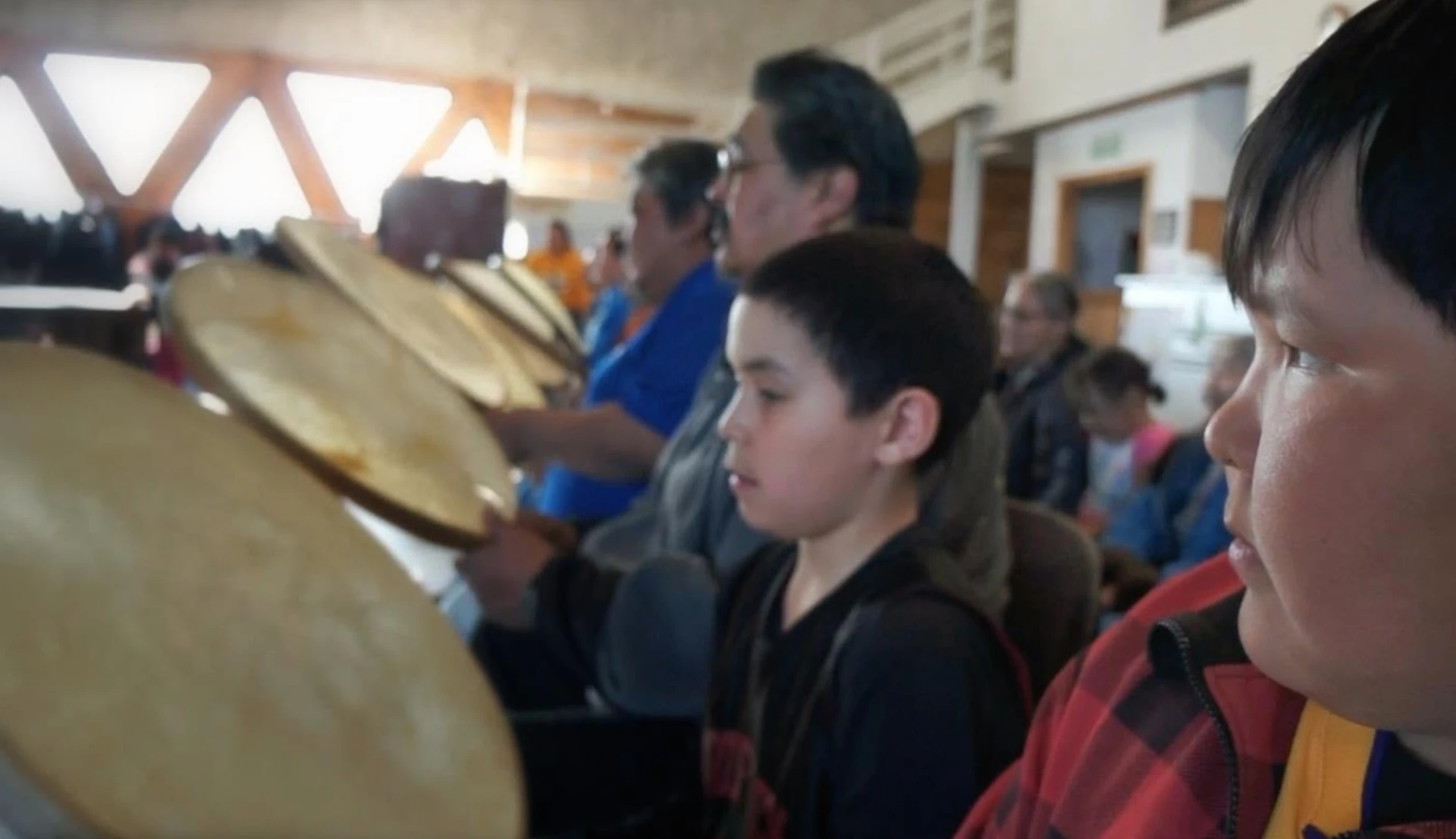
Qiḷaun 與 花鼓 — two drums, one heartbeat.
三眼观世 · The Three-Eyed Framework
Music and dance are not entertainment alone — they are ways of speaking with the spirit world, with animals, with nature, and with one another.
First Eye
Inupiaq Epistemology
Dance as communication with the spiritual world, animals, and universe; the drum as a living entity; connection to the whales and the environment; iluaq — wholeness and well-being.
Second Eye
Chinese Philosophy
天人合一 harmony with nature; storytelling through song and movement; cultural preservation; 孝 filial piety.
Third Eye
Western Arts Appreciation
Musical elements (rhythm, melody, instrumentation); dance elements (movement, form, expression); historical context.
Semester 1 · Weeks 1–18
Introduction and foundational study: the qiḷaun and the whale, then Hunan Huaguxi.
| Week | Unit | For Lucy 悟 | For Lucas 空 | Three-Eyed Connection | Resources |
|---|---|---|---|---|---|
| 1 | Introduction to Music & Dance | "What is music? What is dance? Why do people sing and move?" | How do music and dance express culture and identity? | All three eyes | Discussion, world map |
| 2 | Mapping Our Ancestral Lands | Locate Point Hope and Hunan on a map. | Locate both; discuss geography and cultural context. | Geography + Identity | Map, globe |
| 3 | Inupiaq Drum: The Qiḷaun | What is the drum made of? How is it played? | What is the spiritual significance of the drum? | First Eye: Sila, connection to whales | Smithsonian Video 1 |
| 4 | Invention: The Eagle Mother | Storytelling: draw the Eagle Mother and the first drum. | Research: why was the drum a "device of power"? | First Eye: Eagle Mother story | Smithsonian Video 1 |
| 5 | Drum Construction & Materials | Build a model drum; discuss driftwood and membrane. | Research the materials and their spiritual meaning. | First Eye: Qiḷaun gives whales eternal life | Smithsonian Video 2 |
| 6 | Drumming & the Whale Hunt | "How does the drum help the whales?" Watch and discuss. | Analyze: "Qiḷaun give whales eternal life after death." | First Eye: Drumming began with the whale hunt | Smithsonian Video 2 |
| 7 | Celebration: Nalukataq | Learn about the whale feast; draw a celebration scene. | Research Nalukataq; compare to a celebration in your own culture. | First Eye: Community joy and iluaq | Smithsonian Video 3 |
| 8 | Dance & Emotion | Watch Inupiaq dance; show an emotion through movement. | Analyze a dance video: what story is being told? | First Eye: Dance communicates with spirits | Smithsonian Video 3 |
| 9 | Iluaq: Wholeness & Well-being | "How does the drum make people feel whole?" | Paragraph: "The Drum and Iluaq — music and community balance." | First Eye: Iluaq | Reflection |
| 10 | Introduction to Hunan Huaguxi | What is Huaguxi? Where is Hunan? | History of Huaguxi: origins, development, significance. | Second Eye: Chinese opera tradition | Map, Huaguxi video |
| 11 | Huaguxi: 放風箏 Flying a Kite | Listen; discuss the joy of spring and kite flying. | Analyze the lyrics and the 花舌 "flower tongue" technique. | Second Eye: 天人合一 | Huaguxi recording |
| 12 | Huaguxi: 討學錢 Asking for Tuition | Listen; discuss the humor. | Analyze the lyrics, dialect, and social themes. | Second Eye: Storytelling through song | Huaguxi recording |
| 13 | Huaguxi: 七仙女 The Seven Fairies | Tell the simplified story of the fairy who loves a mortal. | Watch 槐荫会 "Meeting Under the Locust Tree"; discuss love and duty. | Second Eye: 孝 filial piety, 仁 compassion | Huaguxi video |
| 14 | Huaguxi: 比古調 Bugu Tune | Listen; discuss the lively folk melody. | Analyze the tune structure and regional style. | Second Eye: Folk traditions | Huaguxi recording |
| 15 | Huaguxi: 劉海砍樵 Liu Hai Cuts Firewood | Tell the story of Liu Hai and the golden toad. | Discuss the myth, humor, and moral lessons. | Second Eye: 孝, 感恩, 仁 | Huaguxi video |
| 16 | Create Your Own Song or Dance | Create a simple song or dance inspired by one tradition. | Create an original composition inspired by both traditions. | All three eyes | Art supplies |
| 17 | Project Work | Continue project; rehearse for performance. | Continue project; research and write. | All three eyes | — |
| 18 | Semester 1 Performance & Celebration | Share projects with family; celebrate learning. | Present projects; discuss what they learned. | All three eyes | Family celebration |
Semester 2 · Weeks 19–36
Deepening understanding and synthesis: songs, ceremony, comparison, and the year-end performance.
| Week | Unit | For Lucy 悟 | For Lucas 空 | Three-Eyed Connection | Resources |
|---|---|---|---|---|---|
| 19 | Review: Inupiaq Drum & Dance | Review the qiḷaun, Eagle Mother, and whale connection. | Review spiritual and cultural significance. | First Eye | Smithsonian Video 4 |
| 20 | Songs & Traditions | Listen to songs; clap simple rhythms. | Analyze song structure and its role in whaling traditions. | First Eye: Music calms the whales | Smithsonian Video 4 |
| 21 | Calling the Whale: Song as Communication | "How do songs call the whale?" Discuss. | Analyze lyrics and purpose of whaling songs. | First Eye: Communication with animals | Smithsonian Video 4 |
| 22 | Dance & the Environment | "Can dance change the wind?" Discuss. | How does dance interact with the physical world? | First Eye: Dance pushes ice away | Smithsonian Video 5 |
| 23 | Messenger Feast & Eagle Mother | Review the Eagle Mother story and the feast. | Research the Messenger Feast's history and significance. | First Eye: Eagle Mother teaches songs | Smithsonian Video 5 |
| 24 | Dance & Ceremony | Watch the dance; discuss movements and meaning. | Analyze dance as storytelling and spiritual practice. | First Eye: Dance honors spirits | Smithsonian Video 5 |
| 25 | Iluaq: Well-being & Identity | "How does dance help the community feel whole?" | How does dance affirm cultural identity? | First Eye: "We are still here" | Reflection |
| 26 | Review: Hunan Huaguxi | Review the songs and stories. | Review the techniques and cultural meaning. | Second Eye | Huaguxi recordings |
| 27 | Storytelling Through Huaguxi | What stories do the songs tell? | What cultural values are shown? | Second Eye: 孝, 感恩, 仁 | Huaguxi recordings |
| 28 | Flying a Kite: Spring & Joy | Discuss spring, renewal, and joy. | Analyze the deeper cultural meaning of spring and nature. | Second Eye: 天人合一 | Huaguxi recording |
| 29 | Asking for Tuition: Humor & Daily Life | Discuss the humor in the song. | Analyze the social commentary in the song. | Second Eye: Storytelling tradition | Huaguxi recording |
| 30 | The Seven Fairies Revisited | Retell the story in your own words. | Compare the love-and-duty theme to other tales. | Second Eye: 孝 filial piety, 仁 compassion | Huaguxi video |
| 31 | Comparing Traditions | How are Inupiaq and Hunan music and dance the same? Different? | How do both traditions connect to nature, community, and spirit? | All three eyes | Venn diagram |
| 32 | Comparing Traditions | How do both traditions build community? | Compare the role of music and dance in identity formation. | All three eyes | Comparison chart |
| 33 | Research Project | Choose one tradition to research. | Choose a tradition for in-depth research. | All three eyes | Research resources |
| 34 | Project Work | Continue project; create visuals. | Continue project; write research paper. | All three eyes | — |
| 35 | Project & Portfolio Preparation | Prepare final project and portfolio. | Prepare final project and portfolio. | All three eyes | — |
| 36 | Year-End Celebration & Performance | Share projects; perform; celebrate the year. | Present research; perform; reflect on the year. | All three eyes | Family celebration |
Iñupiaq Vocabulary
| Iñupiaq | English | Meaning in Context |
|---|---|---|
| Qiḷaun | Hand drum | "Device of power"; a tool for spirit journeys |
| Sauyaq | Drum | General term for drum |
| Sila | The breath of the universe | Weather, spirit, connection to all living things |
| Iluaq | Wholeness, well-being | The felt state of harmony and balance |
| Nalukataq | Whale feast | Spring celebration after whaling season |
| Kivġiq | Messenger Feast | Traditional festival with drumming and dancing |
| Upingakuneng | When they are ready (Yup'ik) | Honoring individual and seasonal timing |
Chinese Vocabulary · 花鼓戏
| Chinese | Pinyin | English | Meaning in Context |
|---|---|---|---|
| 花鼓戏 | Huāgǔxì | Flower Drum Opera | Hunan's traditional opera form |
| 花舌 | Huāshé | Flower Tongue | Vocal trill technique |
| 放風箏 | Fàng Fēngzhēng | Flying a Kite | Folk song about spring joy |
| 討學錢 | Tǎo Xuéqián | Asking for Tuition | Humorous folk song |
| 七仙女 | Qī Xiānnǚ | The Seven Fairies | Classic love story |
| 比古調 | Bǐ Gǔ Diào | Bugu Tune | Lively Huaguxi folk melody |
| 劉海砍樵 | Liú Hǎi Kǎn Qiáo | Liu Hai Cuts Firewood | Classic Huaguxi myth |
| 天人合一 | Tiānrén Héyī | Harmony with nature | Core philosophical concept |
| 孝 | Xiào | Filial piety | Respect for ancestors and family |
Resources
- · Video 1 · Introduction to Iñupiaq Language & Culture
- · Video 2 · Qiḷaun (Drum), Part 1
- · Video 3 · Qiḷaun (Drum), Part 2
- · Video 4 · Songs & Drumming Traditions
- · Video 5 · Dance & Ceremony
- · Video 6 · Cultural Values & Contemporary Life
- · 花鼓戏 放風箏
- · 花鼓戏 討學錢
- · 花鼓戏 七仙女 槐荫会
- · 花鼓戏 比古調
- · 花鼓戏 劉海砍樵
- · Contact the Arctic Studies Center for the free educational guide.
Words to Keep
“Qiḷaun give whales eternal life after death in the form of an instrument.”
“Through drum performances, musicians calm the whales and encourage a successful hunt.”
“Drum music is more important than ever, to help keep the Iñupiaq's relationship to the whales strong.”
“We should always be in the circle of the whale.”
Family Learning Connections
This course grows out of everything else we are studying this year.
| Subject | Connection |
|---|---|
| Science | Seasonal observation (24 Solar Terms); whales and Arctic ecology |
| Social Studies | Geography, cultural studies, worldviews |
| ELA | Storytelling, written reflections, comparative analysis |
| Art | Visual art projects, costume design, instrument making |
| Philosophy | 天人合一 · Sila · 无为 · Iluaq |