Lucas (7th) & Lucy (4th) · Fall 2026

Three-Eyed Seeing Through Two Artists

Ken Lisbourne of Point Hope, Alaska, and 黃永玉 of Hunan, China — two artists from the children's ancestral homelands, examined through Inupiaq epistemology, Chinese philosophy, and Western art criticism.

The Artists

Portrait, story, and one featured work for each artist.

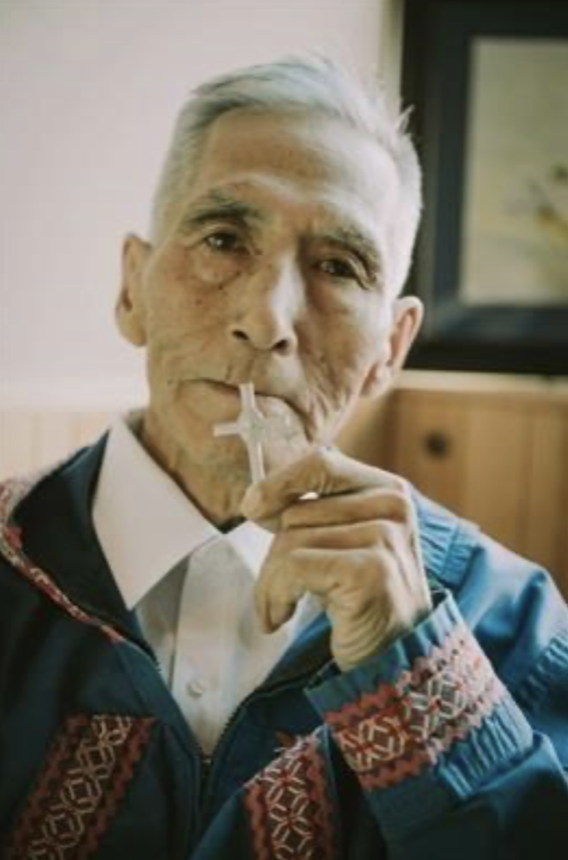
Portrait of Ken Lisbourne

Ken Lisbourne

1950–2017 · Inupiaq artist from Point Hope, Alaska

Born in Point Hope on October 21, 1950; his Inupiaq name was "Ooyahtoona." Best known for watercolors of traditional Inupiaq subsistence life — hunting, fishing, and community gatherings — plus soapstone carvings, baleen etchings, and the carved faces for his wife Iva's Inupiaq dolls. The Smithsonian holds a baleen etching of an Eskimo dance scene.

My best education came from my mother and father, learning to hunt and fish and live a subsistence life.

Key works to study

  • · Blanket Toss (pastel)
  • · Picking Driftwood (watercolor print)
  • · Iva Lisbourne Dolls (carved faces)
  • · Baleen Etching — dance scene
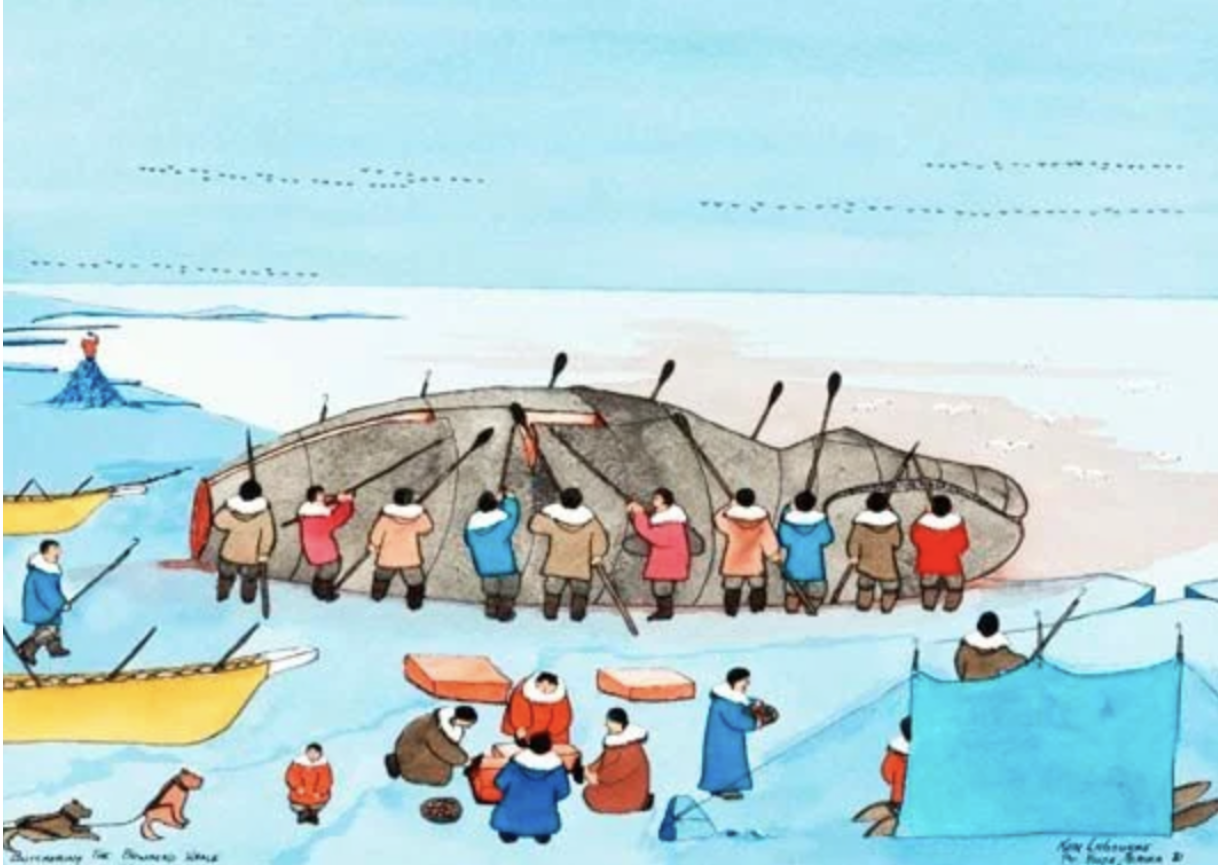
Community Hunt Scene by Ken Lisbourne

Community Hunt Scene

Ken Lisbourne · Watercolor

A whaling or community gathering scene from Point Hope: families work together around the umiak on the ice, with sled dogs and yellow boats waiting nearby.
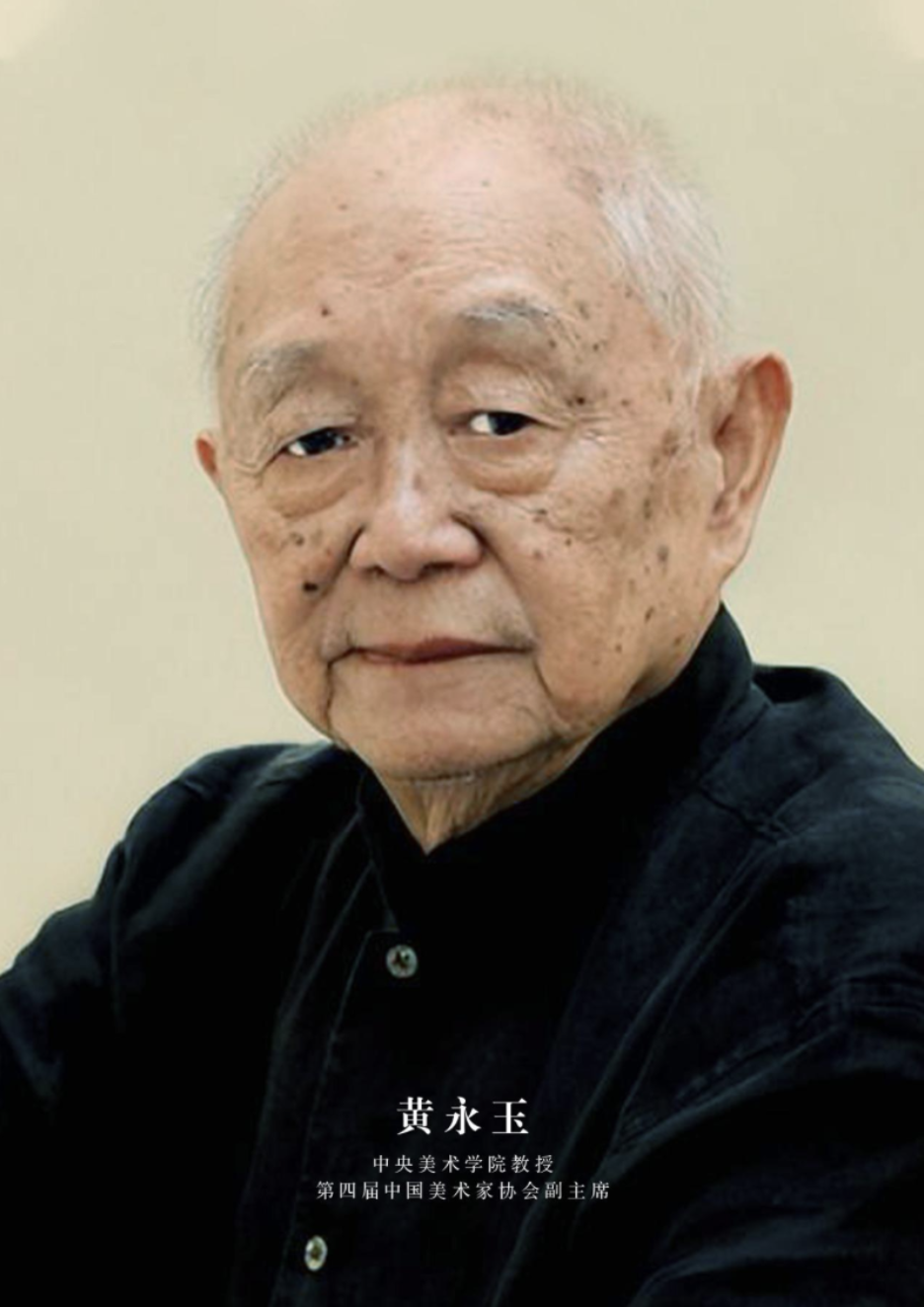
Portrait of 黃永玉 Huang Yongyu

黃永玉 Huang Yongyu

1924–2023 · Tujia artist from Fenghuang, Hunan

Born August 9, 1924 in Changde and raised in Fenghuang; cousin of the writer Shen Congwen. Known as a 鬼才 (genius) working across woodblock prints, Chinese painting, sculpture, literature, architecture, and stamp design. Designed China's first Year of the Monkey zodiac stamp in 1980.

Full of a mix of innocent childishness and passionate boldness — the combination forms a poetic lyricism. — Shen Congwen

Key works to study

  • · Ashima 阿詩瑪 (1956 woodblock series)
  • · Year of the Monkey Stamp (1980)
  • · Owl 貓頭鷹
  • · Lotus and Egrets 荷花雙鷺
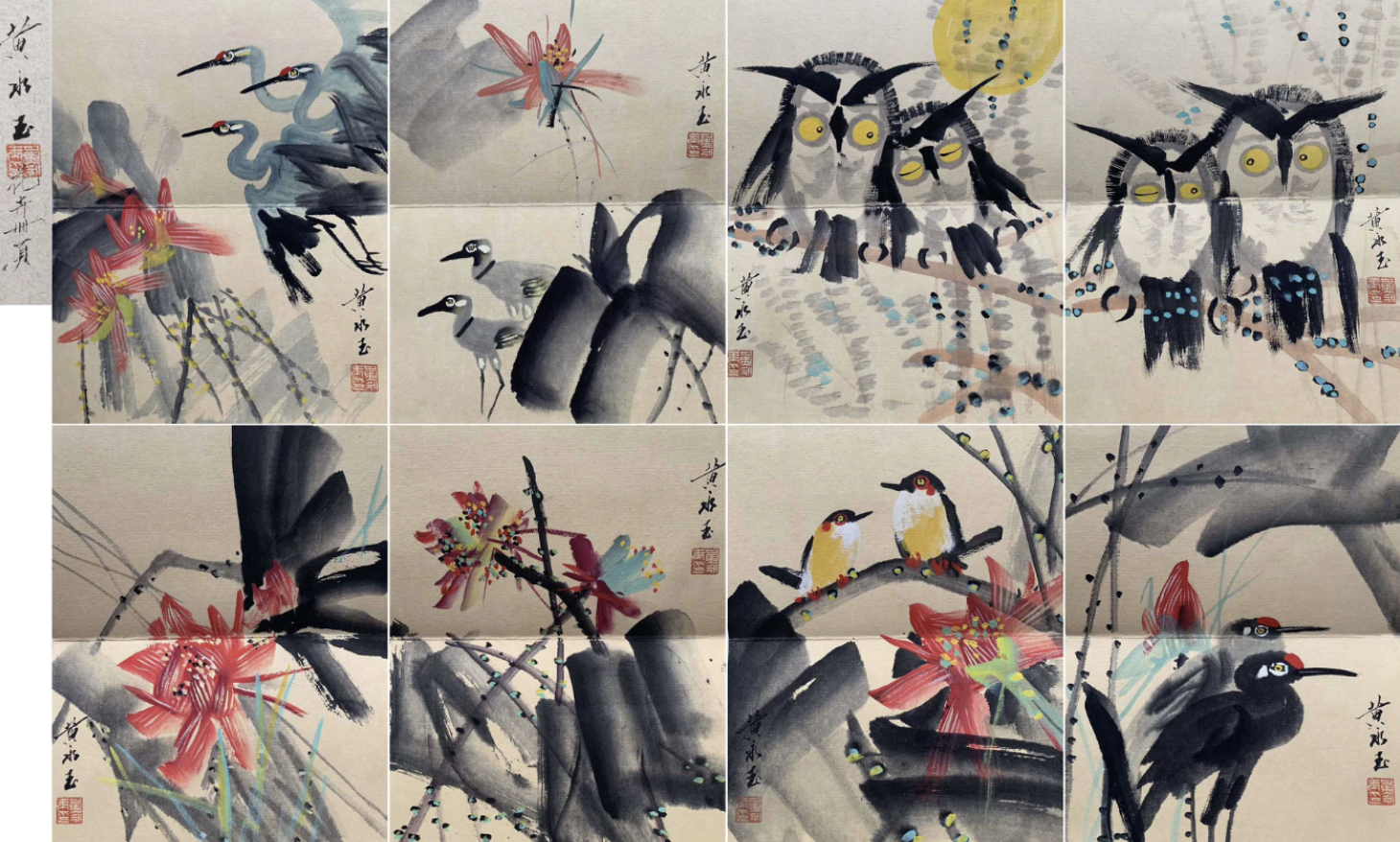
Birds, Owls and Lotus 花鳥冊頁 by 黃永玉 Huang Yongyu

Birds, Owls and Lotus 花鳥冊頁

黃永玉 Huang Yongyu · Ink and color on paper (album leaves)

An album of bird-and-flower leaves: cranes, egrets, owls under a yellow moon, and bright lotus blossoms — bold ink strokes with playful color, each sealed with the artist's red chop.

Guiding Questions by Eye

Each artwork is met three times, with questions tuned to each grade.

EyePerspective4th Grade Questions7th Grade Questions
First EyeInupiaq / Indigenous epistemologyWhat does the artist show about life in Point Hope? What animals and land do you see?How does the artist show relationship with the land? What stories of survival and community are told?
Second EyeChinese philosophy (天人合一, 候, 无为)How does the artist show nature? What makes you feel peaceful here?How does the artist show harmony with nature? What is the rhythm of the work?
Third EyeWestern art theoryWhat colors do you see? What shapes? How are lines used?How does the artist use color, line, form, and composition? What movement does this connect to?

Unit 1 · Introduction to Three-Eyed Seeing in Art

Weeks 1-2

Week / Activity4th Grade7th Grade
Introduce Framework"We see art through three eyes — Inupiaq, Chinese, and Western"Full framework; Etuaptmumk (Two-Eyed Seeing) as equally valid knowledge systems
Artist IntroductionMap Point Hope and Hunan; find on the globeMap both places; discuss geography and cultural context
Guiding QuestionsWhat is an artist? What do artists do?What does it mean to be an artist from an ancestral homeland?

Unit 2 · Ken Lisbourne — Inupiaq Art from Point Hope

Weeks 3-6

Week / Activity4th Grade7th Grade
Week 3Ken's life in Point Hope; his name "Ooyahtoona"Biography & context; subsistence lifestyle; the "best education" quote
Week 4Blanket Toss — community gathering, colorful sceneCultural meaning of the celebration; write a description
Week 5Picking Driftwood — what driftwood is used forRelationship with land; nature walk collecting natural materials
Week 6Iva Lisbourne Dolls — collaborative artResearch traditional doll-making; family collaboration project

Unit 3 · 黃永玉 — Chinese Art from Hunan

Weeks 7-10

Week / Activity4th Grade7th Grade
Week 7Huang's life in Hunan; a "genius" artistTujia ethnicity; self-taught artist; 候 — learning through observing
Week 8Ashima — woodblock prints and their story1956 series; Western and Chinese technique combined; make a print
Week 9Monkey Stamp — favorite animalsZodiac symbolism; design a stamp for your birth year
Week 10Owl — how does it make you feel?"Black Painting" and the Cultural Revolution; resilience as an artist

Unit 4 · Comparative Art Analysis

Weeks 11-14

Week / Activity4th Grade7th Grade
Week 11Compare Arctic scenes with Huang's nature paintingsSila vs. 天人合一; comparative paragraph
Week 12"Each painting has a story" — what story would you tell?Narrative works compared; write a story from an artwork
Week 13Materials: paint, pastel, soapstone / woodblock, inkExperiment with watercolor and ink techniques
Week 14What does it mean to be Inupiaq? Chinese?How each artist expresses cultural identity; reflection essay

Unit 5 · Final Project & Exhibition

Weeks 15-16

Week / Activity4th Grade7th Grade
Week 15Artwork inspired by both artists and your heritageOriginal artwork combining both influences
Week 16Share artwork with family; talk about your favorite partPresent to family; write a reflection essay

Grade-Level Differentiation

Element4th Grade7th Grade
ComplexitySimple observation and descriptionAnalysis, comparison, and critical thinking
WritingShort sentences, labels, simple descriptionsParagraphs, essays, research notes
Art SkillsBasic drawing and painting; simple printmakingAdvanced drawing and painting; woodblock / linocut
Cultural UnderstandingRecognition of cultural practicesAnalysis of cultural meaning and identity
Final ProjectSimple artwork with explanationOriginal artwork with written reflection